Quantum City
Our vision for the development of the Priory of Saint Michael: the knowledge and technology hub of the Roya International District, between the Ligurian Sea and the Roya Valley.
Quantum City, at the heart of the Roya district
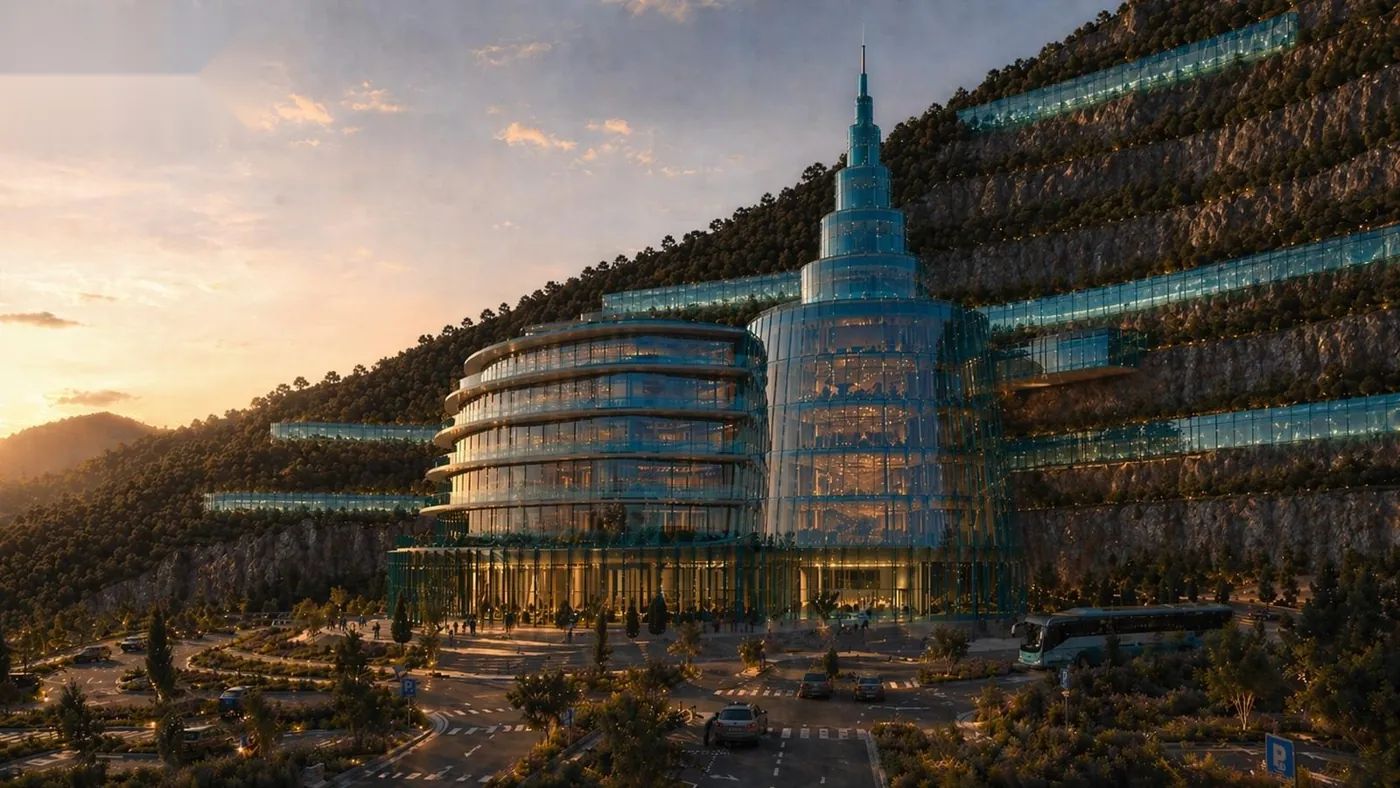
Project under study
This is our vision for the development of the Priory of Saint Michael. The project is currently under study. Any support towards its funding is welcome.
Technical adviser: Brother Andrea
Thanks to an initiative strongly desired by the Prince-Abbot, the Priory of Saint Michael will be the seat of a smart city with a technology hub for nanotechnology and artificial intelligence. It will welcome Italian and foreign companies wishing to develop cutting-edge technological innovations.
This hub is the first phase of a wider programme, the Roya International District, which brings together the territory of Ventimiglia, the Roya Valley and the historic identity of Sabourg within a single long-term economic strategy.
The district in four figures
- 110haArea of the master plan
At least, according to the deck - IVDevelopment phases
- 146.5M€Aviation investment
First phase, stated as confirmed - 2027First revenue expected
Horizon given in the deck
The figures on this page come from the ROYA International District presentation deck. The deck itself states that they are the architect's projections and warrant independent diligence.
History creates identity, innovation creates prosperity
Sabourg is one of the most distinctive identity elements of the territory: a historic and cultural landmark of the Ligurian hinterland, with heritage documented across centuries.
The Priory of Saint Michael becomes the cultural and institutional landmark of the district. It is home to the Aprosiana Civic Library, founded in 1648 and recognised as the first public library in Liguria, placed under papal protection in 1653, and to the future Mediterranean Numismatic Museum.
The presentation deck refers to Sabourg strictly as a historical, cultural and territorial identity. It makes no claim regarding sovereign or legal status, which remains outside the scope of this investment proposal.
Four phases, one ecosystem
Every phase strengthens the value of the others, anchored by the identity of Sabourg.
Quantum City
Knowledge and technology: aviation academy, technology transfer, researcher residences, data centre and technology campus.
Art Arche
Heritage and culture: numismatic museum, Aprosiana Library, conservatory, music and audiovisual production.
Energy Lagoon
Water and renewables: regulating lakes, flood defence, smart energy grid, marina and water park.
Mobility Omega
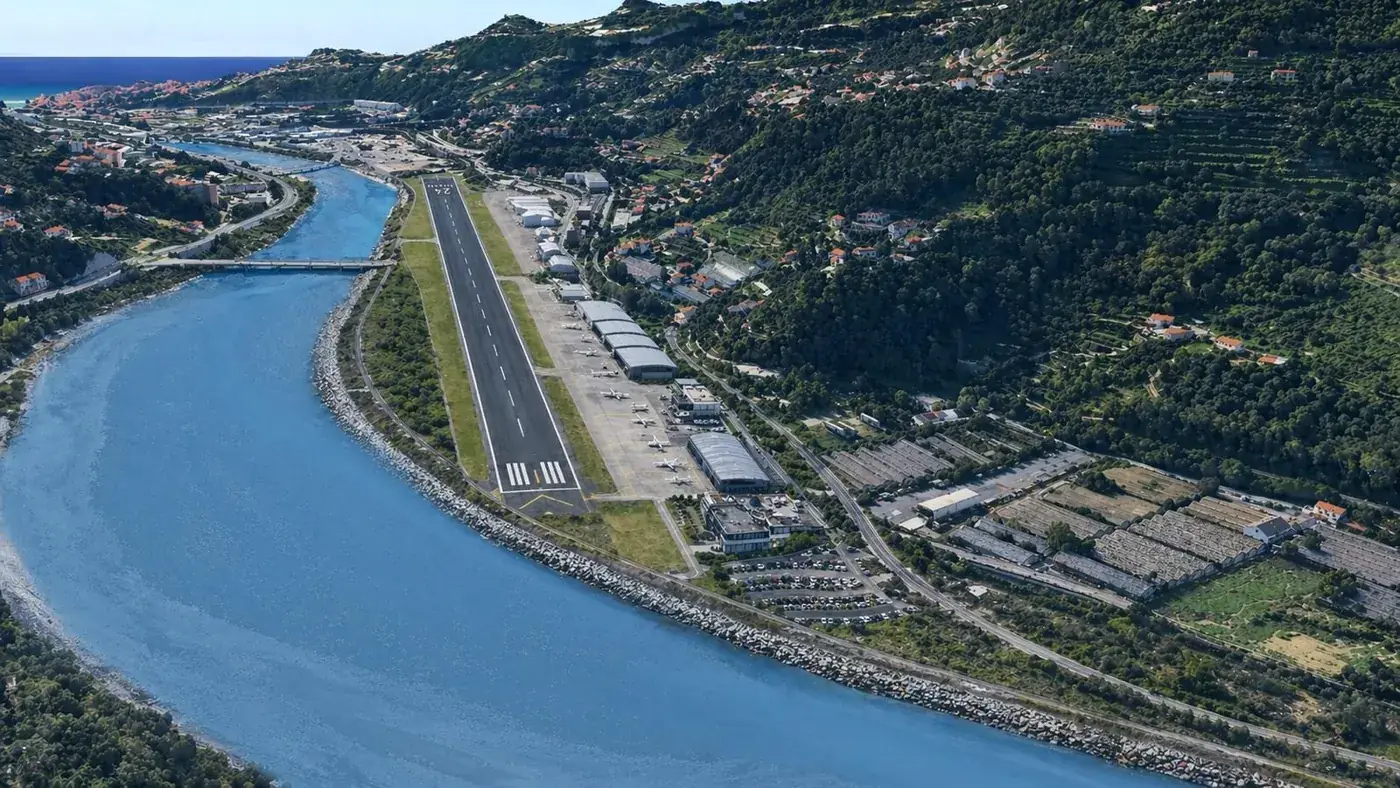
Aviation and logistics: flight academy, regional airport, air cargo and autonomous transport hub.
Quantum City — knowledge first
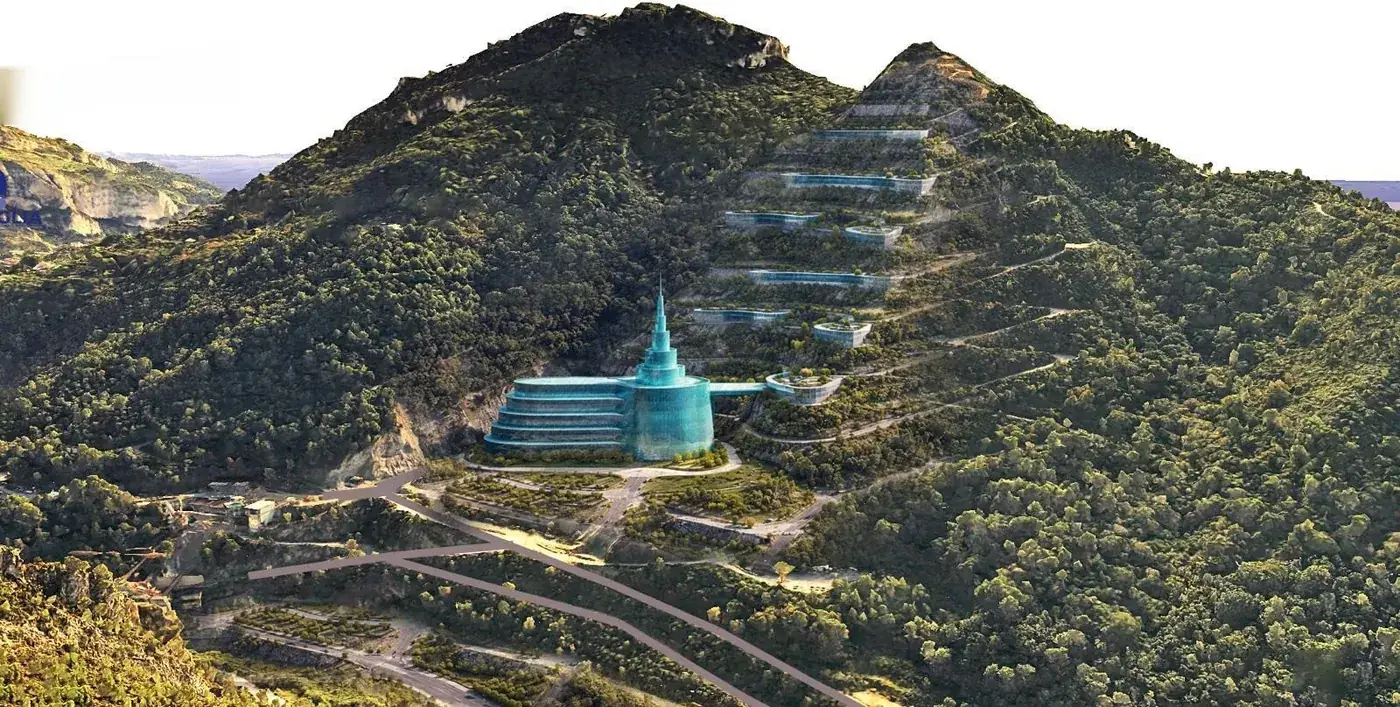
The innovation engine of the district, built around research, talent and education before scale. The programme runs from the smallest facility to the largest:
- Aviation & Technology Academy — training pilots, engineers and researchers;
- Technology Transfer & Innovation Center — from research to patents, then to industry;
- Business Residence Village — six buildings for researchers and professionals;
- Roya Digital Hub — a scalable 2,000 m² / 3 MW data-centre platform;
- Roya Technology Mountain — a former quarry reborn as an international technology campus.
Target fields: artificial intelligence, robotics, aerospace, drones, water technology and renewable energy. The deck names a first anchor tenant, DODA, on roughly 3,000 m², and forecasts tenant revenue above €100M between 2027 and 2029.
Art Arche — Mediterranean heritage and knowledge
Heritage, research, education, music and cooperation brought together in one cultural ecosystem, from the smallest institution to the landmark centre.
- Mediterranean Numismatic MuseumThe monetary history of the Mediterranean.
- Aprosiana Civic LibraryFounded in 1648, under papal protection from 1653.
- Conservatory & Performing Arts AcademyWith the Royal Philharmonic of Saint Michael.
- Music & Media Production CenterAudiovisual and creative industries.
- Priory of Saint Michael Cultural CenterThe cultural and institutional landmark of the district.
- Ventimiglia International Exhibition CenterInternational exhibitions and conferences.
- European Acoustic Research CenterCertified anechoic chamber.
Public cultural assets remain in municipal ownership.
Energy Lagoon — water as infrastructure
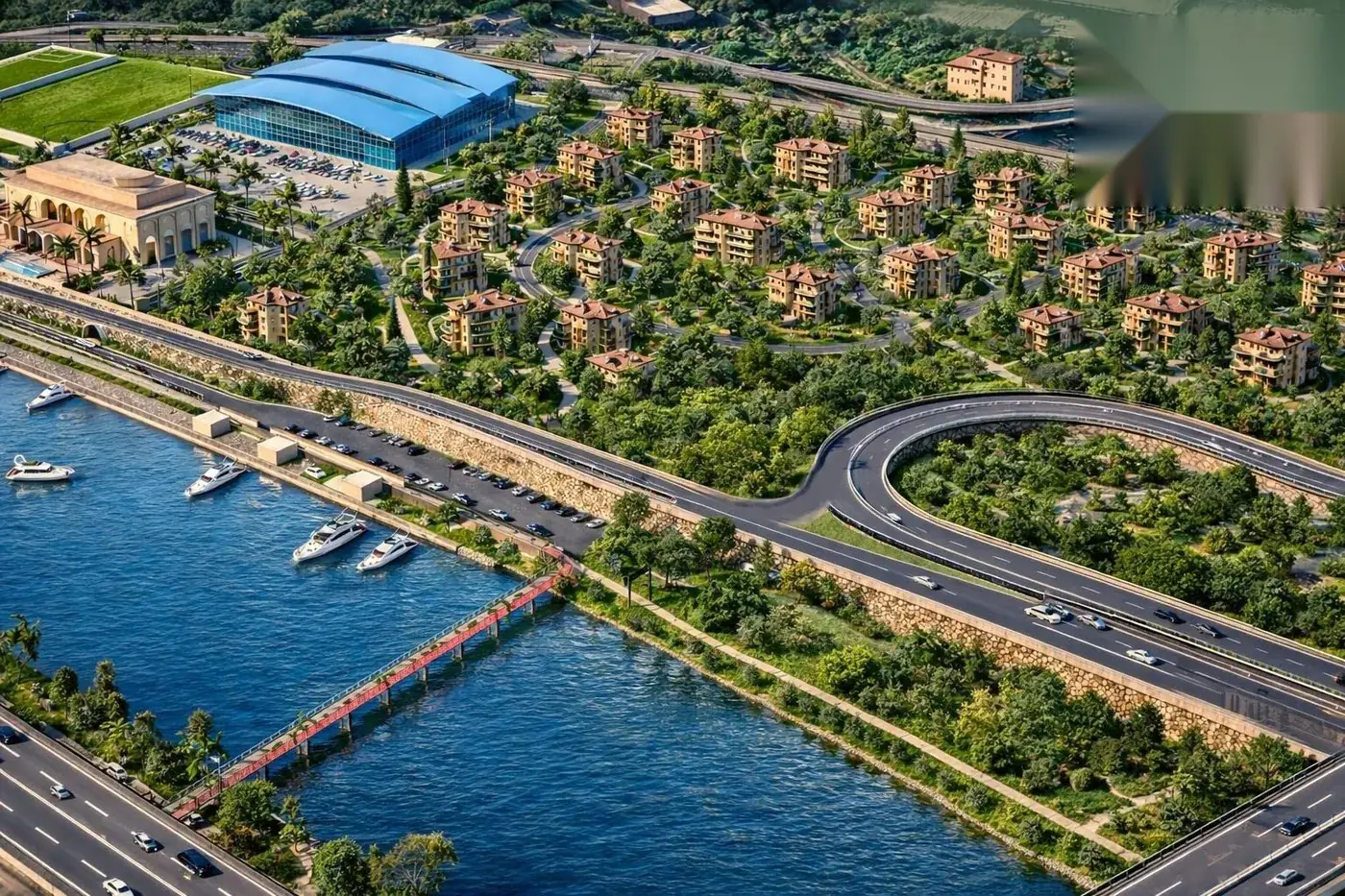
The Roya is a protected river corridor: the project is designed to safeguard and restore it. This phase combines flood and tidal defence, estuary restoration, water security and clean power generation, before turning it into a destination.
- Roya Lake Marina — around 50 berths, boat-lift link to Cala del Forte;
- ORIGYN Water Park — roughly 15,000 m² of lakeside leisure;
- Smart Energy Grid — real-time generation, storage and distribution;
- Climate Resilience & Water Security Center — AI-based extreme-weather prediction;
- Dual regulating lakes and hydro plant — 2,000,000 m³ of freshwater secured.
To these are added the waterfront promenade, the cycle route and the regeneration of the beach.
Mobility Omega — aviation, logistics and connectivity
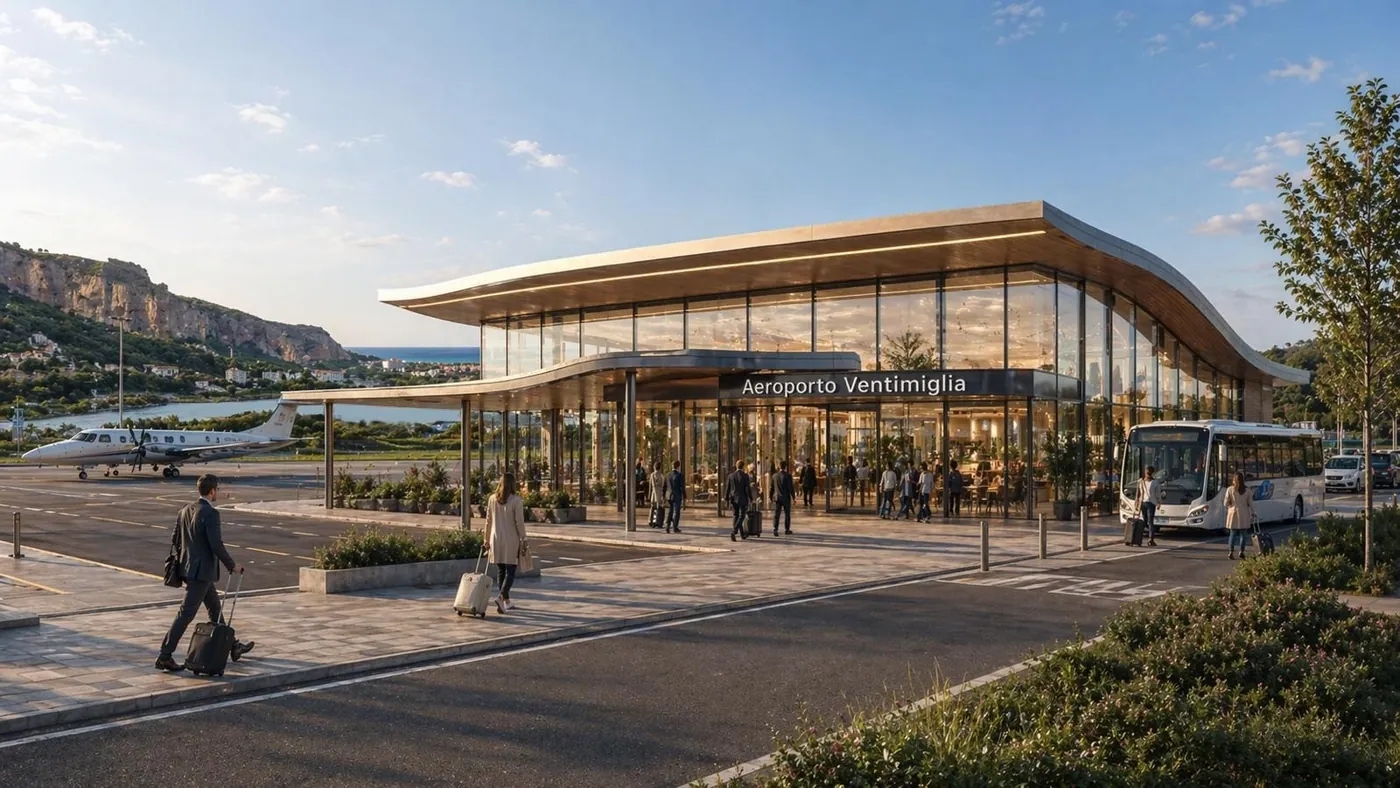
From the flight school to the regional airport that anchors the district:
- Roya Aviation Academy — a dual land–water runway training centre;
- Air Cargo & Parcel Hub — e-commerce, pharmaceuticals and high-value goods;
- Roya Logistics Hub — presented as Europe's first hub for autonomous trucks;
- Roya Wings — a next-generation regional airline;
- Roya Air Valley Airport — a direct link to Europe's business centres.
The deck states €146.5M of confirmed fleet and infrastructure, for an estimated gross annual revenue of €37M and an estimated annual operating profit of €13M.
These amounts and their framing are the architect's projections and warrant independent diligence.
A meeting point of tradition and markets
The project provides for the restoration of the historic Peglia monastery into secure infrastructure for precious metals, numismatics, high-end jewellery and collectible assets — combining heritage, security and international trade.
- Investment precious metals and refining;
- Numismatics and medal production;
- High-end jewellery ateliers;
- High-security vaults and fiduciary services;
- Gemmological certification laboratories;
- Museum and cultural exhibitions.
The deck gives an estimated gross floor area of 3,500–4,000 m² across multiple secure levels, together with a dedicated heliport providing a secure transfer link to the Roya airport. Target audiences: collectors, family offices, foundations, luxury brands and institutional collections.
Public infrastructure first, then private investment
Enabling public infrastructure creates the platform on which private investment develops. The two kinds of capital are structurally separated, which reduces investor risk.
Public infrastructure
Does not target financial return.
- The dual regulating lakes
- Flood and tidal defence
- Estuary restoration
- The waterfront promenade and cycle route
- Roads and parking
Private investment
Develops on the enabled platform.
- The Roya Tower and the Exhibition Center
- Quantum City and the Roya Digital Hub
- The airport and the Logistics Hub
- Energy Lagoon
- The Lake Resort, Marina and Water Park
A phased structure, leveraging European programmes
European co-financing programmes can materially reduce the private capital required for eligible components.
| Programme | Focus | Coverage |
|---|---|---|
| Interreg Italy–France ALCOTRA | Cross-border mobility, environment, culture | 50–80% |
| European Regional Development Fund | Technology Mountain, Digital Hub, Exhibition Center | 40–70% |
| Horizon Europe | Water technology, artificial intelligence, renewable energy, aviation | 50–100% |
| InvestEU / EIB | Airport, Exhibition Center, energy and logistics | Guarantees |
| Connecting Europe Facility | Airport, smart energy, data, logistics | 30–50% |
Capital expenditure, return, timeline and equity structure remain to be confirmed. No special tax rate or regulatory status currently exists: any such framework would remain subject to negotiation and to applicable Italian and EU law.
A phased, scalable model
Strategic alignment
Planning, permits, partnerships and structuring.
Enabling infrastructure
Water, flood resilience, mobility and utilities.
Flagship platforms
Technology Mountain, Digital Hub, airport and energy.
Ecosystem expansion
Culture, education, hospitality and permanent presence.
A fifth stage, “global platform”, covers the international network and full integration. The master plan specifies no dates: this sequencing reflects a logical phasing of enabling works ahead of flagship investment, not a committed timeline.
Joining an ecosystem, not financing isolated buildings
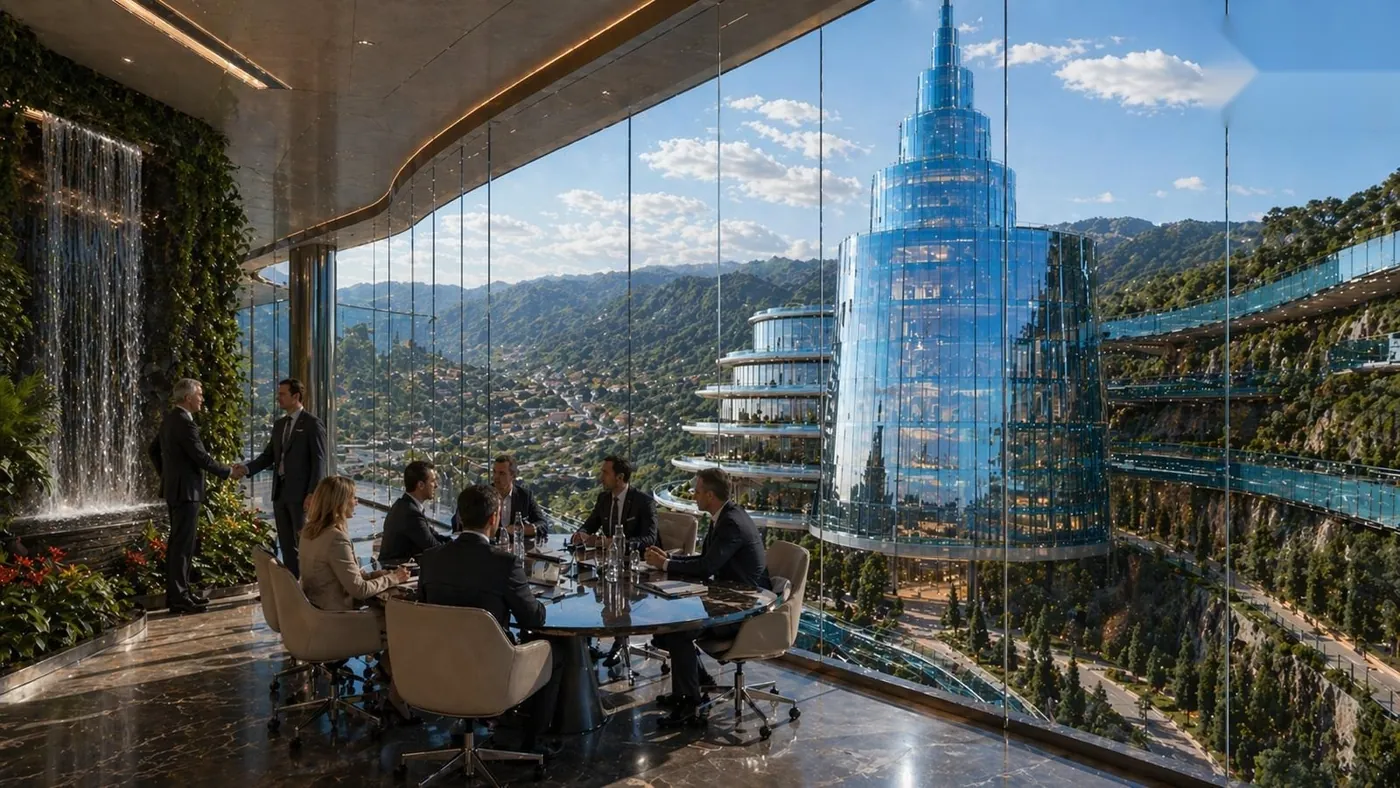
The deck addresses sovereign wealth funds, family offices, infrastructure investors, technology companies, real estate developers and research and cultural institutions.
It offers a permanent European presence — showrooms, headquarters and research and development inside the Exhibition Center and Technology Mountain — in the sectors global capital is moving into: artificial intelligence, renewable energy, water security, aerospace, digital infrastructure and tourism.
Enquiries are received by the Secretariat of State.
La Grange, the economic capital
Between the Ligurian Sea and the river Roya, La Grange, the economic capital of Sabourg, lends itself to the territorial economic development of the Principality. The project to build this economic capital is being defined by the Committee for Major Projects, under the supervision of the Prime Minister and the Minister-Counsellors concerned.
The identification of the space needed for industrial development is already the subject of a study by ASEPAS. A conference presenting the project is planned. Many projects in the academic, educational and sporting fields will also be supported, with a view to a strategic revival of the territory in cooperation with the Italian administrative authorities.
Disclaimers
This page presents the content of the ROYA International District — An Integrated Development Proposal for International Investors deck, prepared for discussion purposes only and subject to due diligence, regulatory approval and definitive agreements. It constitutes neither an offer nor a solicitation of investment. Images: renderings from the presentation deck.